If you’ve ever read through a commercial cleaning quote and found yourself squinting at phrases like “dwell time,” “consumables schedule,” or “pH-neutral cleaning agents,” you’re not alone. Cleaning contracts and service proposals are full of industry-specific language that isn’t always explained clearly. For Perth business owners trying to compare providers or understand what they’re actually paying for, this can make an otherwise straightforward decision feel confusing.
This glossary breaks down the terms you’re most likely to come across when researching or engaging a commercial cleaning service in Perth. Whether you run an office, retail space, medical practice, or warehouse, understanding this language puts you in a stronger position to evaluate quotes, ask better questions, and avoid surprises once a contract is signed.
Commonly Misunderstood Cleaning and Hygiene Terms
These are the words that appear most often in service descriptions but tend to get used loosely, or interchangeably, when they actually mean quite different things.
Cleaning
The physical removal of dirt, dust, and debris from a surface using water, detergent, and friction. Cleaning doesn’t necessarily kill germs; it removes them along with the visible mess. It’s the essential first step before sanitising or disinfecting can be effective.
Sanitising
Sanitising reduces the number of germs on a surface to a level considered safe by public health standards. It’s a step up from cleaning but doesn’t eliminate all pathogens. Sanitising is common in areas like kitchens, staff rooms, and shared equipment.
Disinfecting
Disinfecting uses chemical agents to kill a much higher percentage of bacteria and viruses on a surface. This is typically reserved for high-touch points, healthcare settings, or situations where infection control is a priority. Disinfectants generally need to remain wet on a surface for a specific period to work properly.
Dwell Time (or Contact Time)
This refers to how long a disinfectant or chemical needs to sit on a surface before it’s wiped away, in order to be effective. If a product is sprayed and immediately wiped off, it likely hasn’t had enough dwell time to actually disinfect anything. This is a term worth asking about if hygiene standards matter to your business.
pH-Neutral Cleaning
pH-neutral products sit in the middle of the acid-alkaline scale, making them gentler on surfaces like timber flooring, natural stone, and some finishes that can be damaged by harsher chemicals. Commercial cleaners often use pH-neutral solutions for general daily cleaning and reserve stronger alkaline or acidic products for specific tasks like grease removal or grout restoration.
Micro-fibre Cleaning
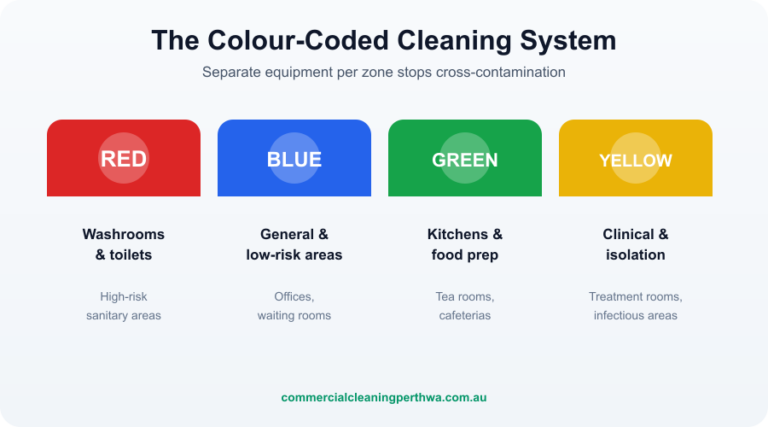
Micro-fibre cloths and mop heads are designed to trap dust, dirt, and bacteria more effectively than traditional cotton cloths. Many Perth commercial cleaners use colour-coded micro-fibre systems to prevent cross-contamination between areas, such as using one colour for bathrooms and another for kitchens.
Cross-Contamination
This describes the transfer of bacteria or contaminants from one surface or area to another, often via cleaning cloths, mop heads, or unwashed hands. Good commercial cleaning practices are built around minimising this risk, particularly in food preparation areas and bathrooms.
High-Touch Points
These are surfaces that are frequently touched by multiple people, such as door handles, light switches, lift buttons, and shared keyboards. High-touch points are usually prioritised for more frequent cleaning or disinfecting, especially in busy commercial environments.
Deep Cleaning
A more thorough clean than routine servicing, typically covering areas that aren’t part of a daily or weekly schedule, such as behind appliances, inside vents, or built-up grime in hard-to-reach corners. Deep cleans are often scheduled periodically rather than as part of standard visits.
Strip and Seal (Floor Care)
This refers to removing old layers of floor finish (stripping) and applying a fresh protective coating (sealing), usually on vinyl or similar hard flooring. It’s a specialised task distinct from regular mopping and is generally quoted separately.
Contract-Specific Language Perth Businesses Encounter
Beyond the cleaning terminology itself, most quotes and service agreements include business and contractual language. Understanding these terms helps you know exactly what you’re agreeing to.
Scope of Works
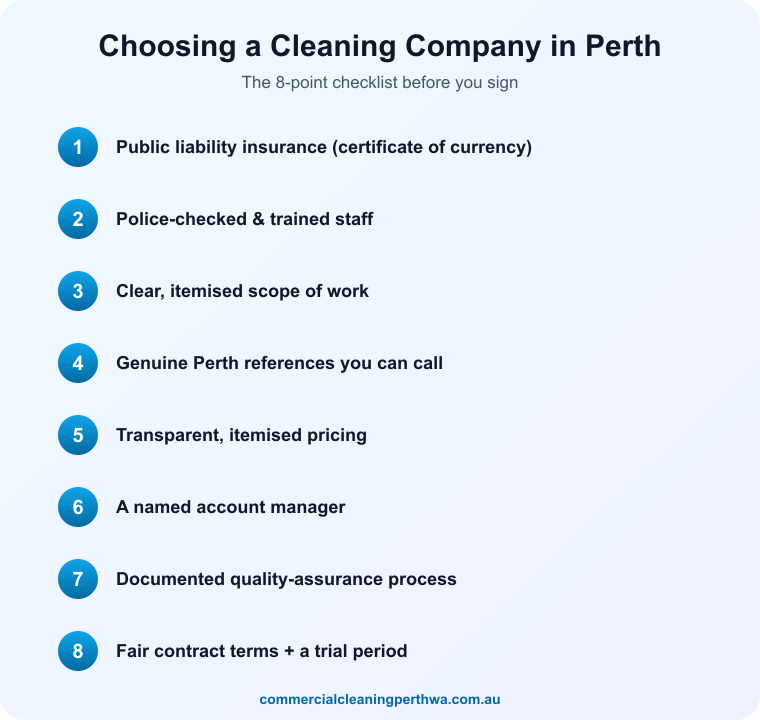
This is the detailed list of tasks a cleaning provider agrees to perform, often broken down by area and frequency. A clear scope of works should specify exactly what’s included, such as vacuuming, bin removal, bathroom sanitising, or window spot-cleaning, and how often each task occurs.
Service Level Agreement (SLA)
An SLA outlines the standard of service you can expect, including response times for issues, quality benchmarks, and how complaints or missed services will be handled. Not every commercial cleaning contract includes a formal SLA, but larger contracts or multi-site agreements often will.
Consumables
These are the everyday supplies a cleaning provider may restock as part of the service, such as toilet paper, paper towels, hand soap, and bin liners. It’s worth clarifying upfront whether consumables are included in your quote or charged separately, as this affects the overall value comparison between providers.
Frequency Schedule
This sets out how often cleaning occurs, whether that’s daily, several times a week, weekly, or on a periodic basis for specific tasks like carpet cleaning or window washing. Frequency directly affects pricing, so it’s one of the first things to clarify when comparing quotes.
Ad Hoc Services
Additional cleaning requests outside your regular schedule, such as a one-off deep clean before an event or an urgent spill clean-up, are usually classed as ad hoc services. These are often quoted and charged separately from the standard contract rate.
Site Induction
Many Perth workplaces, particularly those with safety obligations, require cleaning staff to complete a site induction before starting work. This covers safety procedures, emergency exits, and any site-specific rules the cleaning team needs to follow.
Public Liability Insurance
This is insurance coverage a cleaning provider holds to protect against claims of property damage or injury that occur as a result of their work. It’s reasonable to ask any commercial cleaning provider for evidence of current public liability insurance before signing an agreement.
Exit Clause / Termination Notice
This section of a contract outlines how either party can end the agreement, including how much notice is required. Understanding your exit clause matters if your business needs are likely to change, or if service quality doesn’t meet expectations.
Fixed Term vs. Rolling Contract
A fixed-term contract runs for a set period, such as 12 months, while a rolling contract continues indefinitely until either party gives notice to end it. Rolling contracts often offer more flexibility, while fixed terms may come with more stable pricing.
How Understanding These Terms Helps You Evaluate Quotes with Confidence
Once you’re familiar with this language, comparing commercial cleaning quotes becomes a much more straightforward exercise. Here’s why it matters in practice:
- You can compare like for like. A quote that includes daily disinfecting of high-touch points is a different offer to one that only mentions general cleaning, even if the price looks similar.
- You’ll spot what’s missing. If consumables, ad hoc services, or deep cleaning aren’t mentioned, you’ll know to ask before assuming they’re included.
- You can ask sharper questions. Knowing what dwell time or an SLA actually means allows you to ask a provider how they meet those standards, rather than taking claims at face value.
- You’ll understand your contract terms. Knowing the difference between a fixed-term and rolling agreement, or what your exit clause allows, protects you if your business needs change.
- You can hold providers accountable. If a scope of works clearly states what should happen and how often, it’s much easier to identify when service standards slip.
For Perth businesses managing offices, retail stores, medical or allied health practices, and industrial sites, this knowledge isn’t about becoming a cleaning expert. It’s about being an informed buyer who can read a quote, understand a contract, and make decisions with confidence rather than guesswork.
Frequently Asked Questions
What’s the difference between cleaning and disinfecting?
Cleaning physically removes dirt and debris from a surface, while disinfecting uses chemical agents to kill bacteria and viruses. A surface can look clean without being disinfected, which is why both terms often appear separately in commercial cleaning scopes.
Why does dwell time matter for my business?
If disinfectants are wiped off too quickly, they may not have enough contact time to actually kill germs effectively. This is particularly relevant for businesses with higher hygiene requirements, such as medical practices, childcare centres, or food-related premises.
Should consumables always be included in a commercial cleaning quote?
Not necessarily, but it should always be clearly stated either way. Some providers include consumables like bin liners and hand soap in their standard rate, while others charge for these separately or leave restocking to the client.
What should I check in a service level agreement?
Look for how quality standards are defined, how complaints or missed services are handled, and what response times you can expect if something needs addressing. Not all contracts include a formal SLA, but it’s worth asking about for larger or multi-site arrangements.
Is a fixed-term or rolling contract better for my business?
It depends on your circumstances. Fixed-term contracts can offer pricing stability, while rolling contracts often provide more flexibility if your cleaning needs are likely to change. Reviewing the termination notice period for either option is a sensible step before committing.