
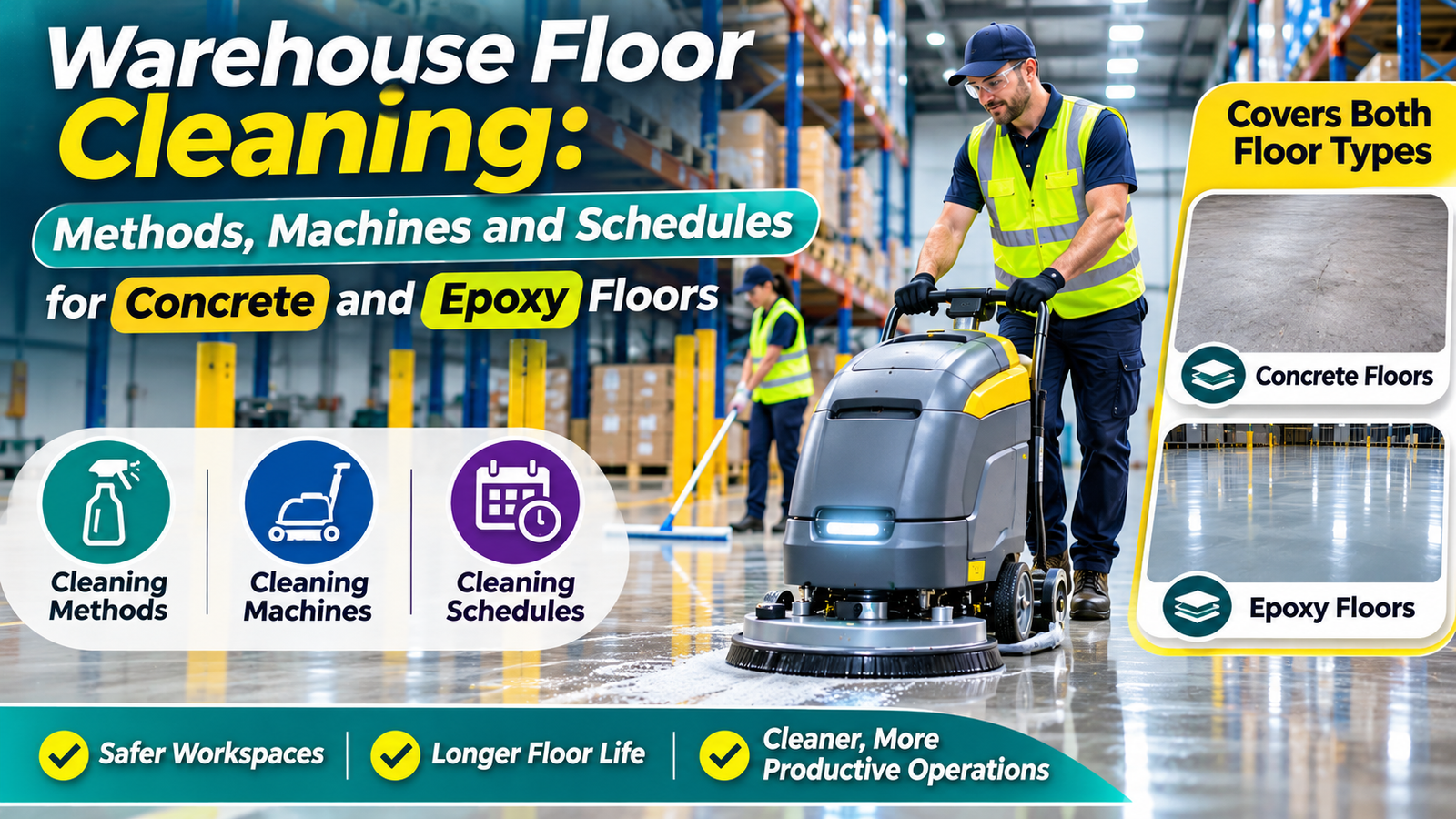
Warehouse floor cleaning is more than keeping a building looking tidy. Dust, tyre marks, oil drips and packaging debris affect traction, forklift performance, stock cleanliness and the life of your floor surface. A clear method, the right machines and a realistic schedule keep both bare concrete and epoxy-coated floors safe and in good condition.
This guide covers how to build that system. It explains how to identify your floor type, which equipment suits which task, how to degrease properly, how to protect coatings and how often each task should happen.
Know Your Floor Before You Clean It
Your floor type determines which chemicals, pads and brushes are safe to use.
Bare and sealed concrete
Bare concrete is porous. It absorbs oil, holds fine dust and can be abraded by aggressive sweeping or the wrong brush. Many warehouses use a penetrating sealer or densifier to reduce dusting and absorption. If your slab is sealed, the sealer protects it only while it stays intact, so harsh chemicals and worn-out brushes shorten its life.
Epoxy and other coated floors
Epoxy and polyurethane coatings form a continuous surface that resists staining and is easier to wipe clean. They are not indestructible, though. Strong solvents, acidic products, abrasive pads and trapped grit under wheels can dull or damage the coating. Smooth, glossy coatings can also become slippery when wet or contaminated, so thorough drying matters.
Before you choose a chemical or pad, check the coating manufacturer's cleaning and maintenance guidance. If you don't have it, coating product Dulux Avista and supplier data sheet from the installer or facility records.
Step-by-Step Warehouse Floor Cleaning Process
Work from dry to wet and from light to heavy. Skipping the dry stage turns dust into slurry and sends grit straight into your scrubber.
Step 1: Clear the area and plan the route
Move pallets, cages and loose items where practical, and coordinate with operations so forklift traffic isn't crossing wet zones. Mark off the area with signage and plan a route that finishes at an exit or dry zone rather than trapping you in wet aisles.
Step 2: Remove loose debris
Pick up strapping, shrink wrap, broken pallet timber and other large items by hand first. These tangle brushes and can damage machines.
Step 3: Dry sweep or vacuum
Remove dust and grit before any water touches the floor. Your options include:
- Broom and dust pan: suitable for small areas, corners and racking bases.
- Push sweepers: useful for medium areas where a ride-on isn't justified.
- Ride-on or walk-behind sweepers: the practical choice for large floor areas and heavy debris loads.
- Industrial vacuums: best where fine dust is a concern, such as around food packaging, electronics or sensitive stock. Use machines with suitable filtration.
Avoid dry sweeping methods that throw fine dust into the air in busy or stock-sensitive areas. Dust control is a WHS consideration, so Safe Work Australia guidance on dust and housekeeping for your type of operation.
Step 4: Spot-treat and degrease
Oil, hydraulic fluid and tyre marks usually need targeted treatment before machine scrubbing.
- Soak up fresh spills with absorbent material and dispose of it in line with your site waste procedures.
- Apply a degreaser suitable for your floor type. Choose a product compatible with your coating or sealer.
- Allow the recommended dwell time on the product label. Don't let it dry on the floor.
- Agitate with a stiff nylon brush or a scrubber-dryer fitted with the correct brush or pad.
Always test a new chemical on a small, inconspicuous area first. Don't mix chemicals. Provide staff with the safety data sheets for every product used on site.
Step 5: Machine scrub with a scrubber-dryer
A scrubber-dryer applies solution, scrubs and recovers dirty water in a single pass. That makes it the most effective tool for routine warehouse floor cleaning on large, smooth surfaces.
Key setup points:
- Brushes and pads: Softer nylon brushes or non-aggressive pads suit epoxy. Textured or heavily soiled concrete may need stiffer brushes or grit-impregnated options. Check what's appropriate for your surface.
- Solution dilution: Follow the label. More chemical doesn't mean a cleaner floor and often leaves a residue that attracts dirt and makes the surface slippery.
- Overlap: Overlap each pass slightly so no stripes of dirt remain.
- Speed: Go slowly across heavily soiled areas to give the solution time to work.
- Squeegee condition: Worn or damaged blades leave water behind. Inspect and replace them regularly.
Step 6: Detail edges, corners and under racking
Scrubber-dryers can't reach everywhere. Use a smaller walk-behind unit, a hand tool or a mop and bucket for tight areas, dock edges, door thresholds and under pallet racking where practical. Edges are where grime builds up first.
Step 7: Dry and inspect
Confirm the floor is dry or nearly dry before reopening aisles. Check for missed patches, residue, standing water and any damage such as chips, cracks or worn coating. Record problems and report them promptly.
Choosing the Right Machine for the Job
| Task | Typical equipment | Notes |
|---|---|---|
| Light daily debris | Push broom, push sweeper | Fine for small or low-traffic areas |
| Large open floors | Ride-on or walk-behind sweeper | Cuts time on big footprints |
| Fine dust control | Industrial vacuum with suitable filtration | Check filtration rating needed |
| Routine wet cleaning | Walk-behind or ride-on scrubber-dryer | Match brush or pad to floor type |
| Heavy oil and tyre marks | Scrubber-dryer plus degreaser, stiff brush | Test chemicals first |
| Tight spaces | Compact scrubber or manual tools | For edges and corners |
Machine size should match your floor plan. A large ride-on unit is inefficient in narrow, racked aisles, while a small walk-behind will take too long on an open slab. Battery-powered units suit enclosed spaces, though charging time and battery maintenance need planning.
Maintaining Epoxy and Coated Floors
Coating maintenance is mostly about prevention.
- Remove grit regularly. Grit trapped under wheels acts like sandpaper on the coating.
- Clean spills promptly. Chemical spills can stain or soften some coatings if left to sit.
- Use appropriate cleaners. Neutral or manufacturer-approved products are generally the safer starting point. Confirm with the coating supplier.
- Protect high-wear zones. Turning circles, loading docks and aisle intersections wear fastest. Consider additional protection where traffic is heaviest.
- Inspect for damage. Peeling, cracking and dull patches should be assessed early, since small failures spread.
- Plan recoating. Recoating intervals depend on traffic, product and preparation quality, so.
A Practical Warehouse Floor Cleaning Schedule
Use this as a starting framework and adjust it for your traffic, product type and compliance requirements.
Daily
- Remove loose debris from main aisles and docks.
- Sweep or vacuum high-traffic routes.
- Clean up spills immediately.
Weekly
- Scrubber-dry main aisles and dock areas.
- Detail edges and corners.
- Check scrubber brushes, squeegees and filters.
Monthly
- Scrub the full floor area, including less-used zones.
- Degrease known oil and tyre mark areas.
- Inspect floor surface and joints for damage.
Quarterly or annually
- Deep scrub the whole warehouse, including under racking where accessible.
- Review coating condition and book repairs or recoating if needed.
- Review the schedule against actual use.
Food, pharmaceutical and high-dust operations may need more frequent cleaning than this.
Common Mistakes to Avoid
- Wet cleaning before removing dust and grit.
- Using too much chemical and leaving residue.
- Using abrasive pads on coated floors.
- Skipping drying, which creates slip risks.
- Ignoring machine maintenance, such as clogged filters or worn squeegees.
- Leaving small coating damage unrepaired.
When to Bring in a Professional
In-house teams can handle daily sweeping and routine scrubbing, but heavier jobs such as deep scrubs, after-hours cleans or large floor areas often suit a contractor with the right equipment and procedures. If you operate in Perth, our warehouse cleaning services and factory cleaning pages outline what we offer. We also work with industrial sites around areas like Kewdale. For a tailored schedule, contact our team.
FAQ
How often should a warehouse floor be cleaned?
Most sites need debris removal and sweeping daily, with scrubber-dryer cleaning weekly or more often in busy zones. The right frequency depends on traffic, stock type and any compliance requirements.
Can I use the same cleaner on concrete and epoxy floors?
Not always. Concrete and epoxy react differently to chemicals, so check the product label and the coating manufacturer's guidance, and test on a small area first.
What is the best machine for warehouse floor cleaning?
For routine wet cleaning, a scrubber-dryer sized to your floor layout is usually the most efficient option. Pair it with sweeping or vacuuming to remove dry debris beforehand.
How do I remove oil stains from warehouse concrete?
Absorb fresh spills, apply a suitable degreaser, allow dwell time and agitate. Old stains on unsealed concrete may not fully lift, and may require specialist treatment.
Why is my epoxy floor slippery after cleaning?
Residue from excess chemical or incomplete drying is a common cause. Reduce dilution, rinse effectively and make sure the floor is fully recovered by the squeegee.