What Is Medical Cleaning? A Beginner’s Guide for Perth Healthcare Facilities
If you manage a clinic, aged care home, dental practice, or any healthcare facility in Perth, you’ve probably heard the term “medical cleaning” used interchangeably with general commercial cleaning. In reality, the two are quite different. Understanding what medical cleaning actually involves is the first step toward protecting patients, staff, and your facility’s reputation.
This guide breaks down what medical cleaning means, the principles behind it, and why healthcare facilities across Perth need a cleaning approach that goes well beyond a standard office clean.
What Is Medical Cleaning?
Medical cleaning is a specialised form of cleaning designed specifically for healthcare environments, where the primary goal is to reduce the risk of infection and cross-contamination rather than simply make a space look tidy. It involves cleaning and disinfecting surfaces, equipment, and high-touch areas using methods and products that meet health and safety standards relevant to clinical settings.
Unlike general cleaning, which focuses on dust, dirt, and visual cleanliness, medical cleaning is built around the idea that surfaces can harbour harmful microorganisms even when they appear spotless. This means the process, the products used, and the order in which tasks are carried out are all deliberately structured to minimise health risks.
How Medical Cleaning Differs From General Cleaning
The differences between medical cleaning and standard commercial cleaning come down to purpose, process, and precision. Some of the key distinctions include:
- Purpose: General cleaning aims for a visually clean space. Medical cleaning aims to reduce microbial load and prevent the spread of infection.
- Products used: Medical cleaning typically requires hospital-grade disinfectants and cleaning agents suited to healthcare environments, rather than standard household or commercial-grade products.
- Cleaning sequence: Areas are often cleaned in a specific order — from low-risk to high-risk zones — to avoid transferring contaminants between spaces.
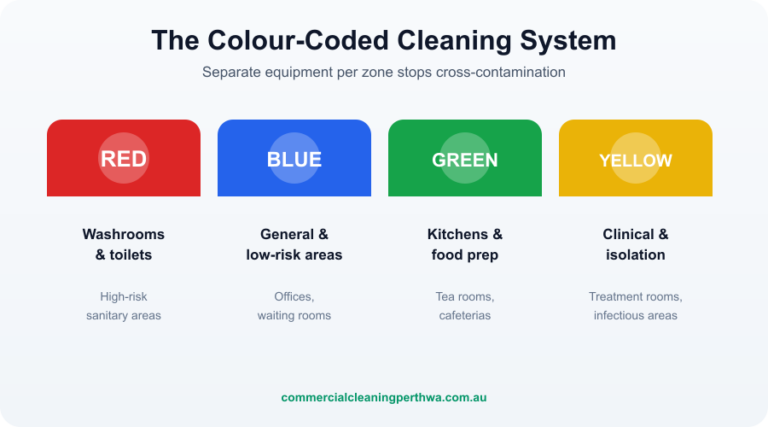
- Equipment handling: Cleaning tools such as cloths, mops, and buckets are often colour-coded or designated for specific areas to prevent cross-contamination between clinical and non-clinical zones.
- Training requirements: Cleaning staff working in medical environments generally need an understanding of infection control practices, not just general cleaning techniques.
- Documentation: Many healthcare facilities require cleaning logs, checklists, or audit trails to demonstrate that cleaning protocols have been followed consistently.
In short, medical cleaning treats every surface as a potential source of contamination and structures the entire cleaning process around eliminating that risk, not just improving appearance.
Key Principles of Medical Cleaning
Medical cleaning isn’t just about using stronger chemicals or cleaning more often. It’s guided by a set of core principles that shape how cleaning is carried out in any healthcare setting, from a small allied health clinic to a larger residential care facility.
Infection Control
Infection control is the foundation of medical cleaning. The goal is to break the chain of infection by removing or destroying pathogens before they can spread between patients, staff, or visitors. This involves:
- Using disinfectants proven effective against a range of bacteria and viruses
- Allowing correct contact or “dwell” time for disinfectants to work properly
- Paying close attention to high-touch surfaces such as door handles, light switches, bed rails, and shared equipment
- Following consistent cleaning schedules rather than ad hoc or reactive cleaning
Infection control isn’t a one-off task. It’s an ongoing practice that needs to be built into the daily rhythm of a healthcare facility.
Cross-Contamination Prevention
Cross-contamination happens when germs are transferred from one surface, object, or person to another. In a healthcare setting, this risk is heightened because facilities often house people with weakened immune systems, open wounds, or existing infections.
Medical cleaning protocols are designed to reduce this risk through practices such as:
- Separating cleaning equipment used in clinical areas from that used in general or administrative areas
- Cleaning from the cleanest areas to the dirtiest to avoid spreading contaminants
- Using single-use disposable cloths or wipes in higher-risk zones where appropriate
- Ensuring hand hygiene and personal protective equipment (PPE) protocols are followed by cleaning staff
Even small oversights, like using the same cloth in a treatment room and a waiting area, can undermine an otherwise thorough cleaning routine.
Hygiene Standards and Consistency
Healthcare facilities are typically expected to meet defined hygiene standards, which means cleaning can’t be inconsistent or left to individual judgement. Medical cleaning relies on:
- Documented cleaning procedures and checklists
- Clear frequency schedules for different areas (for example, high-touch surfaces cleaned multiple times a day versus general areas cleaned once daily)
- Regular review of cleaning practices to ensure they remain aligned with current guidance
- Accountability measures, such as sign-off sheets or supervisor checks
This consistency is what separates a genuinely reliable medical cleaning service from a general cleaner who simply uses stronger products.
Why Perth Healthcare Facilities Need Specialised Cleaning Protocols
Perth’s healthcare sector spans a wide range of facility types, including GP clinics, dental practices, physiotherapy centres, aged care homes, day surgeries, and allied health practices. Each of these environments has its own layout, patient flow, and risk profile, which means a generic cleaning approach rarely meets the mark.
Diverse Facility Types, Diverse Risks
A dental surgery has different contamination risks compared to an aged care facility, and a physiotherapy clinic has different needs again compared to a day surgery centre. Specialised medical cleaning protocols account for these differences by tailoring cleaning frequency, product selection, and zoning to the specific type of facility.
For example:
- Treatment rooms and procedure areas typically require more frequent and more rigorous cleaning than reception or waiting areas.
- Facilities housing vulnerable populations, such as elderly residents, often need stricter infection control measures due to increased susceptibility to illness.
- Practices handling any clinical waste or bodily fluids need cleaning protocols that address safe handling and disposal alongside surface cleaning.
Protecting Patients, Staff, and Reputation
For any Perth healthcare facility, cleaning standards directly affect patient safety and staff wellbeing. A facility that maintains rigorous, well-documented medical cleaning practices is better positioned to:
- Reduce the risk of healthcare-associated infections
- Support compliance with relevant health and workplace safety obligations
- Build patient and visitor confidence through a visibly clean and well-maintained environment
- Provide a safer working environment for clinical and administrative staff
Patients and their families often notice cleanliness as one of the first indicators of how seriously a facility takes safety. A consistent, professional approach to medical cleaning reinforces trust, even before a patient interacts with clinical staff.
The Value of Working With Experienced Cleaning Providers
Because medical cleaning requires specific knowledge of infection control principles, appropriate products, and structured processes, many Perth healthcare facilities choose to work with cleaning providers who specialise in healthcare environments rather than relying on general commercial cleaning services. Experienced providers understand:
- Which areas require priority attention and how often
- How to structure cleaning routines to avoid cross-contamination
- The importance of documentation and consistency for accountability
- How to adapt cleaning practices to different facility types and layouts
This specialised knowledge is what allows a healthcare facility to maintain hygiene standards day in and day out, rather than treating cleaning as an afterthought.
Frequently Asked Questions
Is medical cleaning the same as sterilisation?
No. Medical cleaning refers to the cleaning and disinfection of surfaces and environments, while sterilisation typically refers to a specific process used to eliminate all microorganisms from instruments or equipment, often through heat or chemical processes. Medical cleaning is broader and focuses on the overall facility environment.
How often should a healthcare facility be cleaned?
This depends on the type of facility, the areas involved, and patient traffic. High-touch surfaces and clinical areas generally require more frequent cleaning than administrative or waiting areas. A tailored cleaning schedule, rather than a one-size-fits-all approach, is the most effective way to manage this.
Can general cleaners perform medical cleaning?
General cleaners can carry out basic cleaning tasks, but medical cleaning requires additional knowledge of infection control principles, correct product use, and cross-contamination prevention. Facilities are generally better served by cleaning staff or providers who have specific experience in healthcare environments.
What areas of a healthcare facility need the most attention?
High-touch surfaces such as door handles, light switches, shared equipment, treatment tables, and waiting room furniture typically require the most frequent and thorough attention, as these are common points of contact for multiple people throughout the day.
Final Thoughts
Understanding what medical cleaning is, and how it differs from general cleaning, helps healthcare facility managers make informed decisions about hygiene and infection control. For Perth healthcare facilities, adopting specialised cleaning protocols isn’t just about compliance; it’s about creating a safer environment for patients, staff, and visitors alike. As facilities continue to manage varying patient needs and risk levels, a structured, well-documented approach to medical cleaning remains one of the most practical ways to support that goal.