Anyone responsible for keeping a Western Australian school clean and safe eventually runs into the same question: who actually sets the rules? Between government departments, industry associations, and workplace safety regulators, school cleaning in WA is shaped by more than one set of hands. Understanding who these key entities are, and how they interact, makes it much easier to judge whether a cleaning arrangement is actually meeting the mark.
This article breaks down the main players involved in school cleaning standards in Western Australia, the frameworks that guide compliance, and how all of this translates into what happens on the ground each day.
Overview of WA Department of Education Cleaning Requirements
The WA Department of Education sets the baseline expectations for cleaning across public schools in the state. These expectations typically cover general school premises, staff amenities, classrooms, food preparation areas, and shared spaces such as libraries and assembly halls.
For public schools, cleaning is generally delivered either through in-house school staff, contracted cleaning providers engaged through department procurement panels, or a mix of both depending on the school’s size and location. Regardless of the delivery model, schools are expected to maintain consistent hygiene and presentation standards that support a safe learning environment.
Core Areas Typically Covered
- Classrooms and shared learning spaces
- Toilets and amenities blocks
- Canteens and food handling areas
- Administration and staff areas
- Outdoor covered areas and undercover walkways
- Waste management and bin servicing
Cleaning frequency and scope are usually determined by factors such as student numbers, the age of the facility, and whether the school includes specialist areas like science labs, trade workshops, or early childhood centres, which often carry additional hygiene considerations.
Private and Independent Schools
Independent and Catholic schools in WA are not bound by the same departmental procurement processes as public schools, but they still operate under the same overarching work health and safety laws and public health obligations. Many independent schools choose to align their cleaning specifications closely with public sector standards simply because those benchmarks are well established and easy to reference when briefing contractors.
Relevant Industry Bodies, Certifications, and Compliance Frameworks
Beyond the Department of Education, several other entities influence how cleaning is carried out in WA schools. These bodies don’t necessarily write school-specific rules, but their standards and guidance are frequently referenced in cleaning contracts and internal procedures.
WorkSafe WA
WorkSafe WA administers work health and safety laws that apply directly to cleaning operations, including the safe handling and storage of chemicals, correct use of personal protective equipment, and safe systems of work for tasks like floor stripping or working at height. Any cleaning contractor operating in a WA school needs to demonstrate compliance with these obligations, since school sites are shared spaces with children present during and around cleaning activities.
Safe Work Australia
Safe Work Australia produces the model codes of practice that underpin state-based work health and safety regulation, including guidance relevant to hazardous chemicals and manual handling. While it isn’t a WA-specific body, its codes are commonly used as reference material when developing site-specific safety procedures for school cleaning teams.
Cleaning Industry Associations
National and state-level cleaning industry associations play a role in setting benchmarks for training, best practice, and professional development within the sector. Membership or accreditation with a recognised industry body is often used by schools as one indicator of a contractor’s credibility, alongside references and past performance in similar environments.
Australian Standards Relevant to Cleaning
Several Australian Standards touch on aspects of commercial and institutional cleaning, particularly around infection control, chemical storage, and equipment safety. These standards aren’t school-specific, but they are commonly cited within cleaning specifications and contractor inductions as a way of setting a consistent quality benchmark.
Public and Environmental Health Guidance
The Department of Health in Western Australia provides guidance relevant to hygiene in public buildings, including food safety requirements for school canteens and general infection control principles. Schools often draw on this guidance when setting cleaning frequencies for high-touch surfaces, particularly during periods of increased illness such as winter months.
How These Entities Influence Day-to-Day Cleaning Practices in Schools
It’s one thing to know these bodies exist, but the more useful question for school staff, P&C committees, and facility managers is how all of this actually shapes daily cleaning routines.
Setting the Cleaning Specification
Most schools work from a documented cleaning specification, whether that’s a departmental template or a custom document developed with a contractor. This specification typically lists tasks, frequencies, and responsible parties for each area of the school. Department of Education requirements, WorkSafe obligations, and public health guidance all feed into how this document is written.
Contractor Selection and Induction
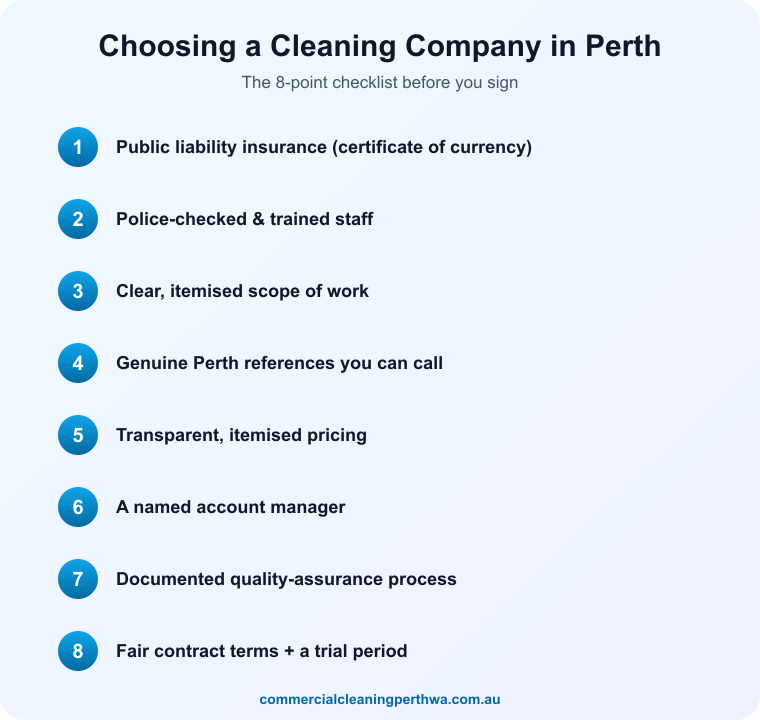
When a school engages a cleaning contractor, industry accreditation and safety certifications often form part of the selection criteria. Contractors are usually required to complete a site induction covering:
- Chemical storage and handling procedures specific to the site
- Working around students, including supervision and access restrictions
- Incident reporting processes
- Correct use of signage during wet floor cleaning or other temporary hazards
This induction process is where compliance frameworks move from paperwork into practical, everyday behaviour on site.
Ongoing Monitoring and Quality Checks
Many schools use periodic audits or checklists to confirm that cleaning standards are being maintained. These checks often reference the original specification and may be carried out by school administration staff, a facilities manager, or the contracting body itself. Where a school is part of a broader department panel arrangement, contractors may also be subject to periodic performance reviews.
Responding to Specific Risks
Certain situations call for adjusted cleaning practices that go beyond the standard schedule, such as outbreaks of illness within a school community, renovation or construction dust, or after-hours events that bring additional foot traffic. In these cases, guidance from health authorities or WorkSafe often informs a short-term change to cleaning frequency or method, layered on top of the school’s usual routine.
Communication Between Schools and Providers
Clear communication channels between school administration and cleaning providers help ensure that standards aren’t just set on paper but are actually reflected in daily practice. This might include regular contact points, a simple reporting system for missed tasks, or scheduled walk-throughs of the site. Schools that maintain this kind of ongoing dialogue tend to have fewer surprises when it comes to compliance reviews or parent feedback about cleanliness.
Bringing It All Together
School cleaning standards in Western Australia aren’t governed by a single rulebook. Instead, they emerge from a combination of Department of Education requirements, work health and safety law, industry best practice, and public health guidance. For schools and cleaning providers alike, understanding how these pieces fit together makes it easier to build a cleaning program that is genuinely fit for purpose, rather than one that simply looks compliant on paper.
Frequently Asked Questions
Do private schools in WA have to follow Department of Education cleaning standards?
Independent and Catholic schools are not bound by the same procurement rules as public schools, but they still must comply with general work health and safety and public health obligations. Many choose to align with departmental standards as a practical benchmark.
Who checks that a school cleaning contractor is meeting safety requirements?
Responsibility is generally shared between the school or department overseeing the contract and WorkSafe WA, which administers work health and safety compliance more broadly. Schools often build their own monitoring processes into contractor agreements as well.
Are cleaning frequencies the same for every WA school?
No. Cleaning frequency and scope typically vary based on student numbers, the type of facility, and specific areas such as canteens or early childhood spaces, which often require more frequent attention than general classrooms.
Is industry accreditation compulsory for school cleaning contractors in WA?
Accreditation isn’t universally mandated by law, but many schools use industry association membership or relevant certifications as part of their selection criteria when engaging a cleaning provider.