School and childcare cleaning in Perth focuses on hygiene that protects children and staff: frequent high-touch disinfection, clean and well-stocked toilets, hygienic classrooms and play areas, safe (low-tox) products, and thorough attention to germ hotspots — carried out by police-checked cleaners. Children touch everything and spread germs fast, so cleaning standards here are higher than a typical office. Here's what a compliant scope covers.
Why school & childcare cleaning is different
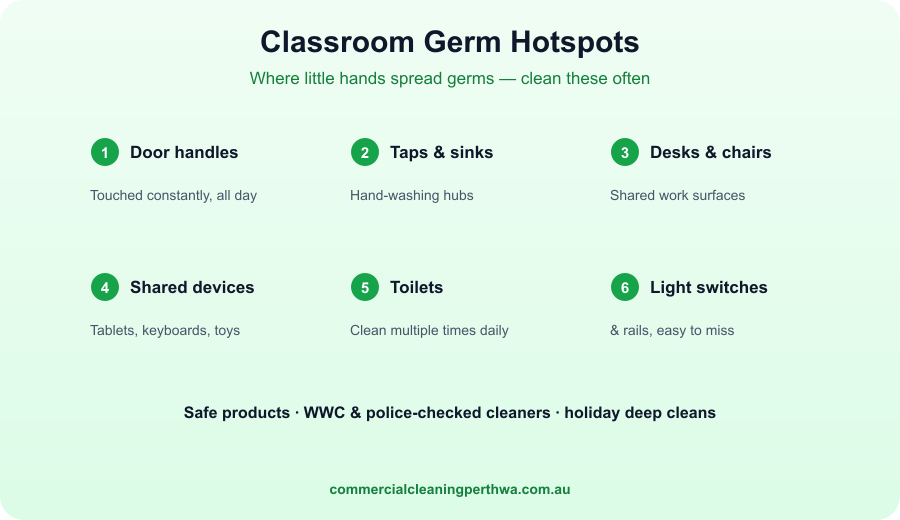
Children are efficient germ-spreaders — they touch surfaces constantly, put things in their mouths, and have developing immune systems. That makes education settings high-risk for transmission of colds, flu, gastro and hand-foot-mouth. Cleaning has to be frequent, thorough and safe, with special care around the products used near children and rigorous attention to the surfaces little hands touch most.
What school & childcare cleaning should cover
| Area | Key tasks | Frequency |
|---|---|---|
| Classrooms | Desks, chairs, high-touch points, floors, bins | Daily |
| High-touch points | Door handles, light switches, taps, rails, shared devices | Daily (frequent) |
| Toilets | Clean, disinfect, restock, floors | Daily (often multiple) |
| Play areas / mats | Disinfect surfaces, toys (per centre policy), soft-fall | Daily |
| Kitchens / canteens | Clean, disinfect food-contact surfaces | Daily |
| Common areas | Halls, corridors, libraries, staff rooms | Daily/weekly |
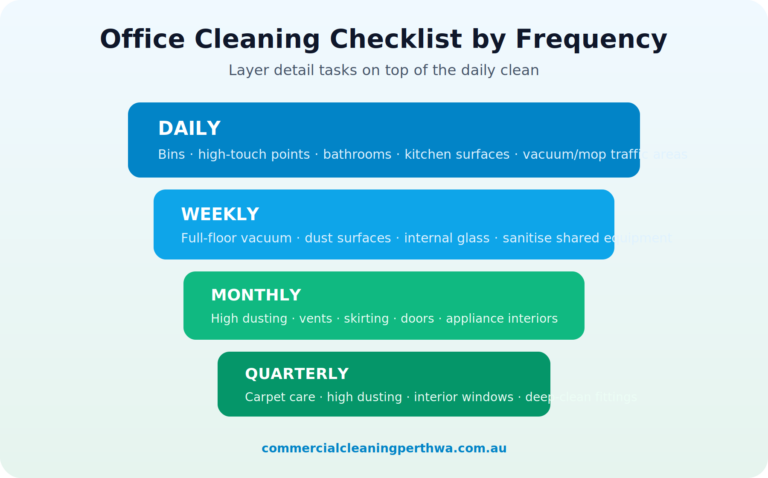
| Deep cleaning | Carpet care, high dusting, holiday deep cleans | Periodic / school holidays |
School holidays are the window for detailed deep cleaning — carpets, high dusting and detailed floor care — while classrooms are empty.
Safety and compliance essentials
Education cleaning carries specific duties. Your provider should:
- Use safe, appropriate cleaning products suited to environments with children.
- Employ Working with Children Check and police-checked cleaners.
- Prioritise high-touch disinfection to reduce illness-driven absences.
- Follow the centre's or school's hygiene and infection policies.
- Support outbreak response (e.g. gastro) with enhanced cleaning when needed.
Always align the scope with your school or centre's own health, safety and child-protection policies — this guide is general and not a substitute for them.
Frequently asked questions
What does school cleaning include? School cleaning includes daily cleaning of classrooms, frequent disinfection of high-touch points like door handles and taps, thorough toilet hygiene, cleaning of play areas and canteens, and common areas, plus periodic deep cleaning during school holidays. It's carried out by police-checked cleaners.
How often should a childcare centre be cleaned? Childcare centres need daily cleaning with frequent high-touch disinfection throughout the day, given how much children touch surfaces. Toilets are cleaned multiple times daily, play areas and mats are disinfected daily, and deep cleaning is scheduled periodically.
What products are used to clean schools and childcare centres? Safe, appropriate products suited to environments with children are used, prioritising effective disinfection of high-touch surfaces while minimising harsh chemical exposure. Product choice follows the school or centre's hygiene policy and safety data sheets.
Do school cleaners need special checks? Yes. Cleaners in schools and childcare settings should hold a valid Working with Children Check and National Police Certificate, as they work in environments with children. Trained, inducted staff who follow the site's child-protection and hygiene policies are essential.
When is the best time to deep clean a school? School holidays are ideal for detailed deep cleaning — carpet care, high dusting and thorough floor work — because classrooms and common areas are empty, allowing disruptive tasks to be completed safely before students return.