Choosing a school cleaning service is not the same as hiring a general commercial cleaner. Schools have unique hygiene demands, safety obligations, and duty-of-care requirements that touch on everything from classroom cleanliness to who is allowed on-site after hours. If you’re a principal, business manager, or facilities coordinator responsible for this decision, it pays to know exactly what to look for before you sign a contract.
This guide walks through the practical questions to ask, the contract and compliance details worth checking, and the red flags that trip up schools when selecting a school cleaning service in Perth.
Why School Cleaning Is Different From Standard Commercial Cleaning
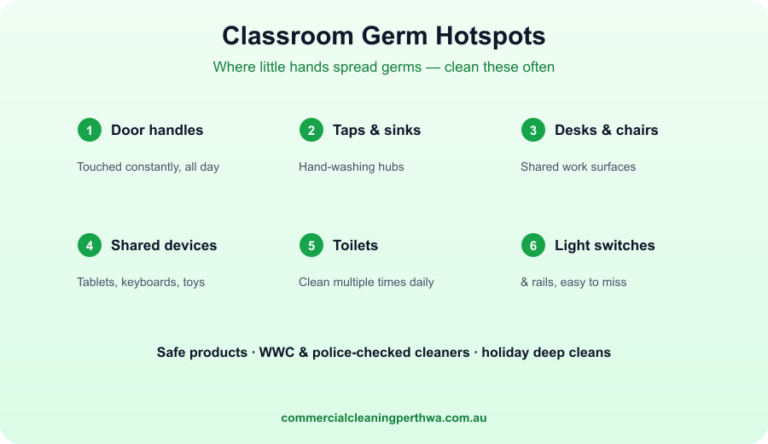
Schools operate on tight schedules, house large numbers of children, and often have shared spaces like canteens, toilets, sick bays, and libraries that need a higher standard of hygiene than a typical office. A cleaning provider working in this environment needs to understand:
- Timing around school hours, assemblies, and after-school activities
- Higher-touch cleaning in classrooms, toilets, and communal areas
- Safe storage and handling of cleaning chemicals around children
- The importance of consistent, background-checked staff on school grounds
Because of this, the vetting process for a school cleaning provider should be more thorough than a standard commercial cleaning tender.
Questions to Ask Before Hiring a School Cleaning Provider
Before you commit to any provider, it helps to have a structured set of questions ready. These will quickly reveal whether a company understands the specific demands of cleaning a school environment.
1. Do you have experience cleaning schools specifically?
Ask for examples of other schools or education facilities they currently service, and how long they’ve been operating in that space. A provider used to office blocks may not be familiar with things like classroom furniture layouts, canteen hygiene standards, or working around school holiday periods.
2. What does your standard cleaning scope actually include?
Get specifics. “General cleaning” can mean very different things to different providers. Ask them to break down:
- What is cleaned daily versus weekly or term-based
- Whether toilets, high-touch surfaces, and common areas are cleaned more frequently
- Whether floor care (vacuuming, mopping, stripping and sealing) is included or charged separately
- How they handle events, spills, or one-off messes outside the regular schedule
3. How do you handle staff vetting and supervision?
This is one of the most important questions for any school. You want clarity on background checks, staff turnover, and who is supervising the cleaning team on your site.
4. What happens if a cleaner is sick or unavailable?
Schools can’t afford gaps in service. Ask how the provider manages staff absences and whether they have backup cleaners who are already familiar with your site.
5. Can you provide references from other schools?
A provider confident in their service should be willing to connect you with another school they currently clean for, or at least share how long their existing school contracts have run.
6. What are your public liability insurance and safety procedures?
Ask to see proof of current insurance and how they manage workplace health and safety, particularly around chemical storage and equipment used on-site.
7. How flexible is the contract?
Schools have unique calendars, with term breaks, pupil-free days, and special events. Confirm the provider can adjust cleaning schedules around these without penalty or confusion.
Understanding Contracts, Insurance, and Staff Vetting Requirements
Once you’ve narrowed down potential providers, the next step is reviewing the finer details of what you’re actually signing up for. This is where many schools either save themselves a lot of trouble later, or set themselves up for problems.
Contract Terms to Review Carefully
Before signing anything, read through the contract for the following:
- Scope of work: A clear, itemised list of what is cleaned, how often, and to what standard.
- Contract length and exit clauses: Understand the minimum term, notice period, and what happens if the service doesn’t meet expectations.
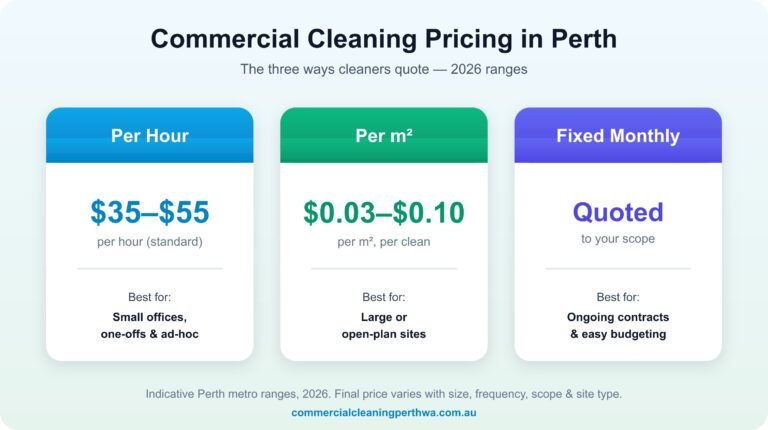
- Pricing structure: Check whether pricing is fixed, or whether there are additional charges for extra cleans, holiday periods, or emergency call-outs.
- Consumables: Confirm whether items like toilet paper, soap, and paper towels are included in the price or billed separately.
- Reporting and communication: How issues are reported and how quickly the provider commits to responding.
Insurance Requirements
Any cleaning provider working on school grounds should carry appropriate public liability insurance. This protects the school if a cleaner is injured on-site or if an accident occurs during the course of their work, such as damage to school property or a slip-and-fall incident caused by cleaning activities.
It’s reasonable to ask for a current certificate of currency and confirm the coverage amount is appropriate for a school environment. Don’t just take a verbal assurance — request the documentation and keep a copy on file.
Staff Vetting and Working With Children Requirements
Because cleaning staff often work on school premises during or immediately after school hours, schools need assurance that all staff attending site have been appropriately screened in line with relevant Western Australian requirements for people working in or around school environments.
When discussing this with a provider, ask:
- Whether all cleaning staff assigned to your school have valid clearances appropriate to working on school grounds
- How often these clearances are renewed and checked
- Whether the same core team is rotated through your school, or whether casual or agency staff are regularly used
- How new staff are inducted before working on-site unsupervised
A provider that can’t clearly answer these questions, or seems vague about how staff are screened, should be treated with caution.
Red Flags and Common Mistakes Schools Make When Selecting a Cleaner
Even experienced facilities managers can be caught out by a smooth sales pitch. Here are the mistakes that come up most often when schools choose a cleaning provider.
Choosing on Price Alone
The cheapest quote is often cheapest because something is missing — fewer cleaning hours, lower staff pay leading to high turnover, or corners cut on consumables and equipment. A significantly lower price than competitors is worth questioning rather than celebrating.
Not Getting the Scope of Work in Writing
Verbal promises about what will be cleaned and how often don’t hold up when a dispute arises. Everything discussed during the sales process should appear in the written agreement, not just in an email or a conversation.
Skipping Reference Checks
It’s easy to accept a provider’s word that they have experience with schools. It’s far more useful to actually speak with another school they currently service and ask about reliability, communication, and how issues are resolved.
Ignoring Staff Continuity
High staff turnover on your cleaning contract means inconsistent quality and repeated re-briefing on your site’s specific needs. If a provider can’t explain how they retain staff or ensure the same team works your school regularly, that’s a warning sign.
Overlooking Communication Channels
Schools need a straightforward way to flag issues — a missed area, a supply that’s run out, or an urgent spill. If there’s no clear point of contact or reporting process built into the contract, minor issues can drag on unresolved.
Assuming All Insurance and Checks Are Automatically in Place
Some providers will state they have appropriate insurance and vetting processes without providing documentation. Schools should always ask to see this in writing rather than relying on assurances alone.
Locking Into Long Contracts Too Early
It’s reasonable to want price certainty, but committing to a long contract before you’ve seen the provider perform can leave you stuck if service quality doesn’t meet expectations. Where possible, negotiate a shorter initial term or a trial period with a clear review point.
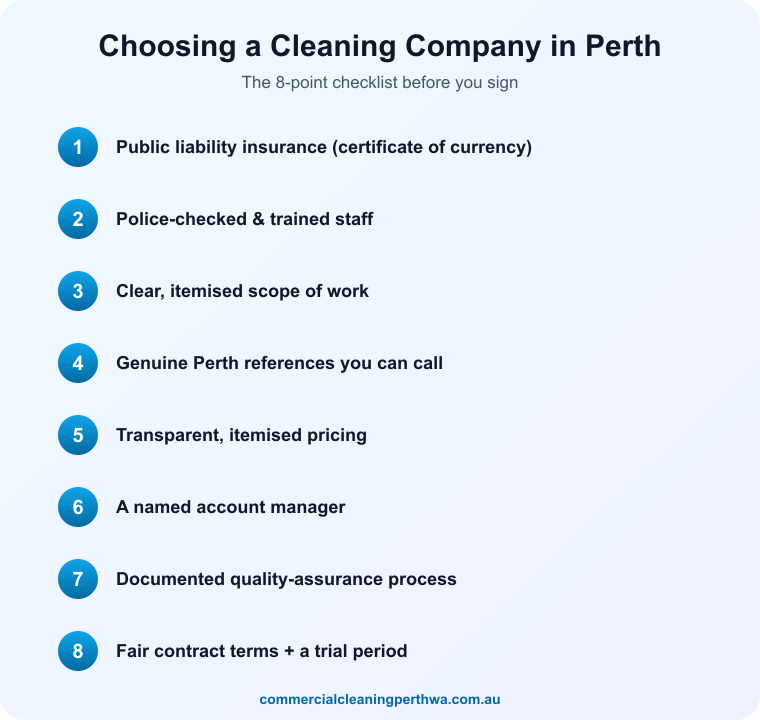
A Simple Checklist Before You Sign
- Scope of work is detailed and in writing
- Pricing structure is clear, with no hidden extras
- Public liability insurance certificate has been provided
- Staff vetting and clearance processes have been explained and confirmed
- References from other schools have been checked
- Contract length, notice period, and exit terms are reasonable
- A clear communication process is in place for reporting issues
Frequently Asked Questions
How often should a school cleaning service visit?
This depends on the size of the school and the areas involved. Most schools require daily cleaning of classrooms, toilets, and common areas, with additional deep cleaning during term breaks. Your provider should be able to recommend a schedule based on your school’s layout and student numbers.
Should cleaning staff be on-site during school hours?
Many schools prefer cleaning to happen after hours to avoid disruption, though some tasks — such as toilet checks or spill response — may need to occur during the school day. This should be agreed on clearly in your contract.
What should be included in a school cleaning contract?
At minimum, it should include a detailed scope of work, pricing structure, contract length and exit terms, insurance confirmation, and a clear process for reporting and resolving issues.
How do I know if a cleaning provider’s staff have been properly vetted?
Ask directly and request confirmation in writing. A reputable provider working in schools should be able to clearly explain their screening process and provide assurance that all staff attending your site meet the relevant requirements.
Final Thoughts
Selecting the right school cleaning service in Perth comes down to asking direct questions, checking the details most schools overlook, and resisting the temptation to choose based on price alone. A provider who is transparent about their scope of work, insurance, and staff vetting processes will save you time, reduce risk, and help keep your school a clean, safe environment for staff and students alike.